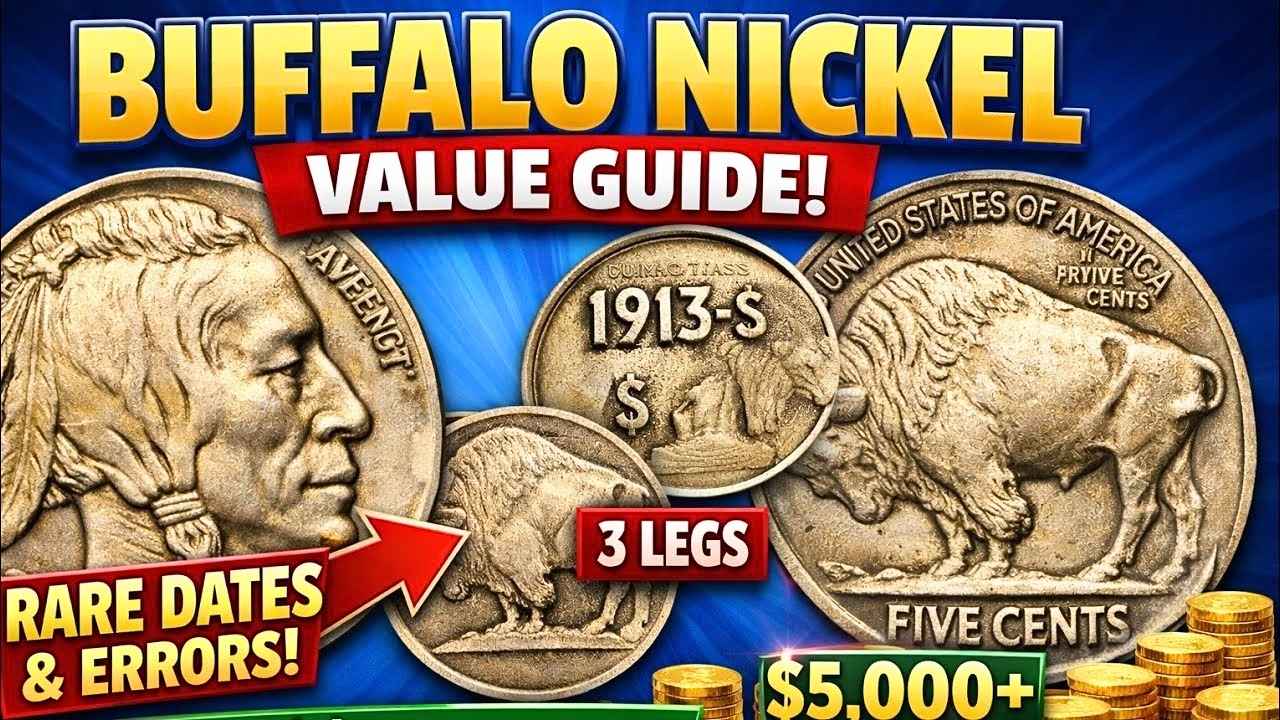
The Buffalo Nickel, also known as the Indian Head Nickel, is one of the most iconic coins in American history. Minted from 1913 to 1938, it features a Native American portrait on the obverse and a majestic buffalo on the reverse. Its bold design and historical significance have made it a favorite among collectors. While many Buffalo Nickels are common, certain rare dates, minting errors, and high‑grade examples are worth far more than their face value. In 2026, interest in Buffalo Nickels remains strong, with collectors eager to uncover hidden treasures.
The Origins of the Buffalo Nickel
The Buffalo Nickel was introduced in 1913 as part of an effort to beautify American coinage. Designed by sculptor James Earle Fraser, the coin was intended to capture the spirit of the American frontier. The obverse features a composite portrait of Native American chiefs, while the reverse depicts an American bison, often believed to be modeled after “Black Diamond,” a buffalo from the Bronx Zoo. The design was striking but posed challenges for the Mint, as the raised details wore down quickly in circulation.

Historical Significance
The Buffalo Nickel represents a period of transition in American coinage. It replaced the Liberty Head Nickel and was eventually succeeded by the Jefferson Nickel in 1938. Its design reflects themes of heritage, strength, and the American West. Collectors value the coin not only for its rarity but also for its cultural symbolism.
Why Buffalo Nickels Are Valuable
Several factors contribute to the value of Buffalo Nickels:

- Rarity: Certain dates and mintmarks had low production numbers.
- Condition: Coins with sharp details and minimal wear are highly prized.
- Errors: Minting mistakes create unique varieties that attract collectors.
- Historical Appeal: The coin’s design and symbolism add to its desirability.
When these factors align, Buffalo Nickels can be worth hundreds or even thousands of dollars.
Rare Dates and Key Issues
1913 Type 1
The first year of issue featured the buffalo standing on a raised mound. This design was quickly modified to prevent wear, making Type 1 coins a collectible rarity.

1913 Type 2
The revised design placed the buffalo on a flat line, improving durability. Both Type 1 and Type 2 coins are sought after, especially in high grades.
1918/7‑D Overdate
One of the most famous Buffalo Nickel varieties, the 1918/7‑D was created when a 1917 die was overpunched with 1918. This error is extremely rare and valuable.

1926‑S
The 1926‑S had one of the lowest mintages in the series. High‑grade examples are scarce and command strong prices.
1937‑D Three‑Legged Buffalo
Perhaps the most legendary error in the series, the 1937‑D Three‑Legged Buffalo was created when a die was over‑polished, removing one of the buffalo’s legs. This coin is highly collectible and often sells for thousands.
Common Errors and Varieties
Buffalo Nickels are known for their fascinating errors. Some of the most notable include:
- Double Dies: Coins with doubled features, especially in the date or lettering.
- Off‑Center Strikes: Coins where the design is misaligned.
- Overdates: Coins struck with dies showing remnants of previous years.
- Die Polishing Errors: Coins with missing details, such as the famous Three‑Legged Buffalo.
These errors add excitement to collecting and can dramatically increase a coin’s value.

Collector Insights
Collectors evaluating Buffalo Nickels often focus on:
- Mintmarks: Coins from San Francisco and Denver are often rarer than those from Philadelphia.
- Condition: Coins with full details, especially in the buffalo’s horn and tail, are highly prized.
- Authentication: Professional grading is essential for rare varieties.
- Provenance: Coins with documented ownership or auction history can command premiums.
By paying attention to these details, collectors can identify valuable coins and avoid common pitfalls.

Value Guide for 2026
As of 2026, Buffalo Nickels remain highly collectible. Common circulation coins may be worth only a few dollars, but rare dates and error varieties can fetch significant sums. The 1918/7‑D overdate and 1937‑D Three‑Legged Buffalo are among the most valuable, often selling for thousands at auction. High‑grade examples of low‑mintage issues like the 1926‑S also command strong prices. Auction records show that demand for Buffalo Nickels continues to grow, reflecting both their rarity and historical significance.
Tips for Collectors
For those interested in building a Buffalo Nickel collection, here are some practical tips:
- Learn to recognize key dates and mintmarks.
- Store coins in protective holders to prevent wear.
- Consider professional grading for high‑value coins.
- Stay informed by reading numismatic publications and attending coin shows.
- Network with other collectors to share knowledge and opportunities.
By following these practices, collectors can build meaningful and potentially valuable collections.
Investment Potential
Buffalo Nickels are not only collectibles but also potential investments. Over time, coins with historical significance and rarity tend to appreciate in value. While coin collecting should be driven by passion, the financial aspect cannot be ignored. Investors often view rare coins as tangible assets that diversify portfolios. However, it is important to approach coin investing with knowledge and caution, avoiding speculative purchases without proper research.

Key Highlights
- The Buffalo Nickel was minted from 1913 to 1938 and designed by James Earle Fraser.
- Rare dates like the 1918/7‑D overdate and 1926‑S are highly valuable.
- Famous errors such as the 1937‑D Three‑Legged Buffalo command strong prices.
- Condition, rarity, and demand strongly influence coin values.
- Collectors should focus on key dates, mintmarks, and proper storage.
- Rare Buffalo Nickels can be worth hundreds or even thousands of dollars.
- The market for these coins remains strong in 2026.
Final Words
The Buffalo Nickel is more than just a coin; it is a symbol of America’s heritage and resilience. From the striking portrait of a Native American to the powerful image of the buffalo, the coin captures the spirit of the nation. Rare dates and hidden errors add excitement to collecting, offering the possibility of turning an ordinary nickel into a valuable treasure. Whether you are a seasoned numismatist or a beginner, Buffalo Nickels provide a rewarding journey into America’s past and a chance to hold history in your hands. In 2026, the message is clear: check your nickels carefully, because some may be worth far more than you imagine.