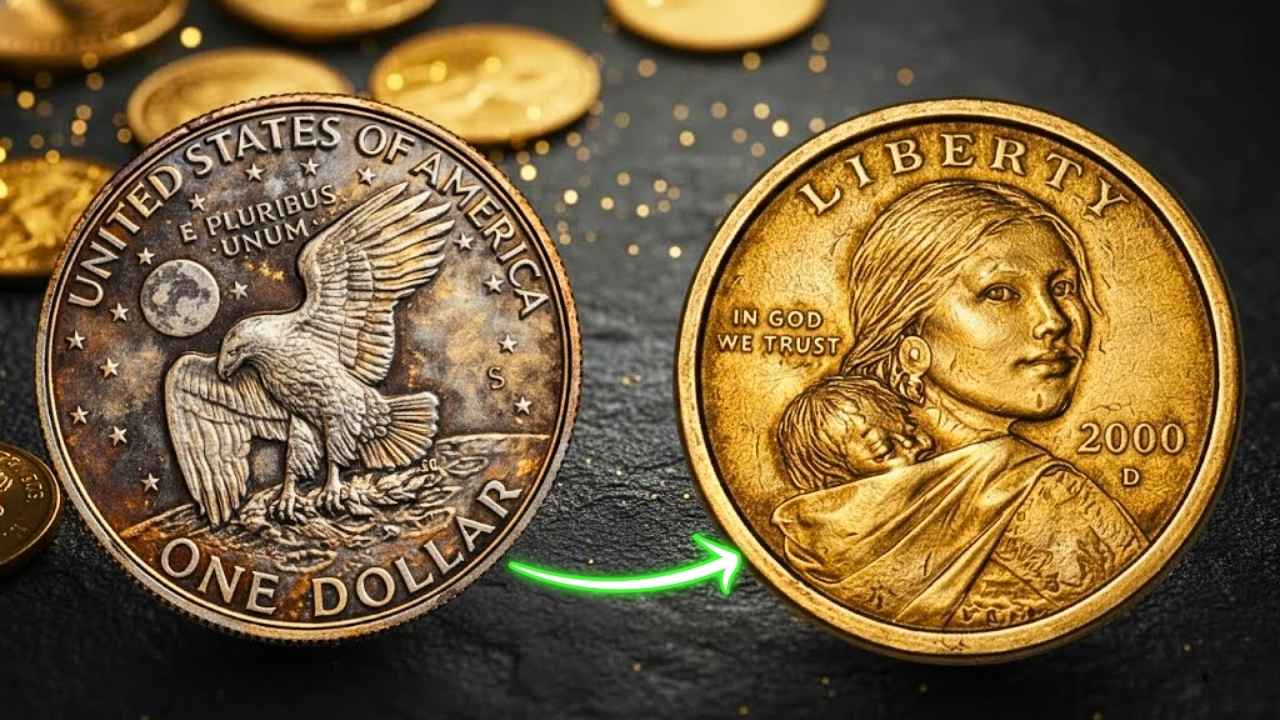
The Sacagawea dollar, first released in 2000, was designed to honor the Shoshone woman who played a vital role in guiding the Lewis and Clark expedition. While most of these coins are worth only their face value, certain rare editions and error varieties have become highly collectible. The 2000‑P issue, struck at the Philadelphia Mint, is especially significant because it marked the beginning of the Sacagawea dollar series. In 2026, collectors continue to search for hidden treasures among these coins, some of which are worth far more than expected.
The Origins of the Sacagawea Dollar
The Sacagawea dollar was introduced to replace the Susan B. Anthony dollar, which had been unpopular in circulation. Its golden color and smooth edge were designed to distinguish it from other denominations. The obverse features Sacagawea carrying her infant son, Jean Baptiste, while the reverse originally depicted a soaring eagle. Later issues introduced rotating designs under the Native American $1 Coin Program. Despite limited circulation, the coin became popular among collectors for its unique design and cultural significance.
Why the 2000‑P Issue Is Special
The 2000‑P Sacagawea dollar stands out for several reasons:
- First Year of Issue: It marked the beginning of the Sacagawea dollar series.
- Philadelphia Mint: Coins struck at Philadelphia are widely collected.
- Promotional Distribution: Some coins were included in special sets and promotions.
- Collector Demand: As the first edition, it attracts strong interest.
These factors combine to make the 2000‑P dollar a coin worth watching in 2026.
The Famous Cheerios Dollar
One of the most famous varieties of the 2000‑P Sacagawea dollar is the Cheerios dollar. In 2000, General Mills distributed 5,500 coins in cereal boxes as part of a promotion. These coins featured enhanced eagle feather details on the reverse, distinguishing them from standard issues. Today, Cheerios dollars are worth thousands, with high‑grade examples selling for tens of thousands at auction.
Hidden Errors and Varieties
The 2000‑P Sacagawea dollar has produced several notable errors and varieties:
- Wrong Planchet Strikes: Coins mistakenly struck on blanks intended for other denominations.
- Missing Edge Lettering: Certain issues lack the edge inscriptions, creating rare varieties.
- Proof Variations: Special proof coins with enhanced finishes are highly prized.
- Experimental Strikes: Coins produced for testing or promotional purposes are rare and valuable.
Collectors actively search for these hidden treasures, often paying significant premiums for authenticated examples.
Collector Insights
Collectors evaluating the 2000‑P Sacagawea dollar often focus on:

- Proof Editions: Special proof coins are highly prized.
- Promotional Issues: Coins distributed through unique promotions, such as the Cheerios dollar, are rare finds.
- Errors: Hidden minting mistakes can elevate a coin’s value dramatically.
- Condition: Coins with sharp details and minimal wear are worth significantly more.
By paying attention to these factors, collectors can identify which coins are worth saving and which are common circulation pieces.
Value Guide for 2026
As of 2026, rare 2000‑P Sacagawea dollars continue to achieve strong auction results. Common circulation coins remain inexpensive, but rare editions and error coins can fetch significant sums. The Cheerios dollar has sold for thousands, while proof coins and experimental strikes are highly collectible. Auction records show that demand for these coins remains vibrant, reflecting both their rarity and historical significance.
Tips for Collectors
For those interested in building a collection of Sacagawea dollars, here are some practical tips:
- Learn to recognize key varieties and promotional issues.
- Store coins in protective holders to prevent damage.
- Consider professional grading for high‑value coins.
- Stay informed by reading numismatic publications and attending auctions.
- Network with other collectors to share knowledge and opportunities.
By following these practices, collectors can build meaningful and potentially valuable collections.

Investment Potential
Rare Sacagawea dollars are not only collectibles but also potential investments. Over time, coins with historical significance and rarity tend to appreciate in value. While coin collecting should be driven by passion, the financial aspect cannot be ignored. Investors often view rare coins as tangible assets that diversify portfolios. However, it is important to approach coin investing with knowledge and caution, avoiding speculative purchases without proper research.
Key Highlights
- The Sacagawea dollar was introduced in 2000 with a golden color and modern design.
- The 2000‑P issue marked the beginning of the series.
- Rare varieties like the Cheerios dollar and promotional issues are highly valuable.
- Hidden errors such as wrong planchet strikes and missing edge lettering add significant value.
- Condition, rarity, and demand strongly influence coin prices.
- Rare examples can be worth thousands of dollars.
- The market for these coins remains strong in 2026.
Final Words
The 2000‑P Sacagawea dollar represents more than just currency; it is a symbol of history, culture, and discovery. From the pioneering Native American guide to the hidden treasures of modern coinage, these coins honor figures who shaped America’s story. Hidden errors and rare varieties add excitement to collecting, offering the possibility of turning an ordinary dollar into a fortune. Whether you are a seasoned numismatist or a beginner, Sacagawea dollars provide a rewarding journey into America’s past and a chance to hold history in your hands. In 2026, the message is clear: check your dollar coins carefully, because some may be worth far more than you imagine.