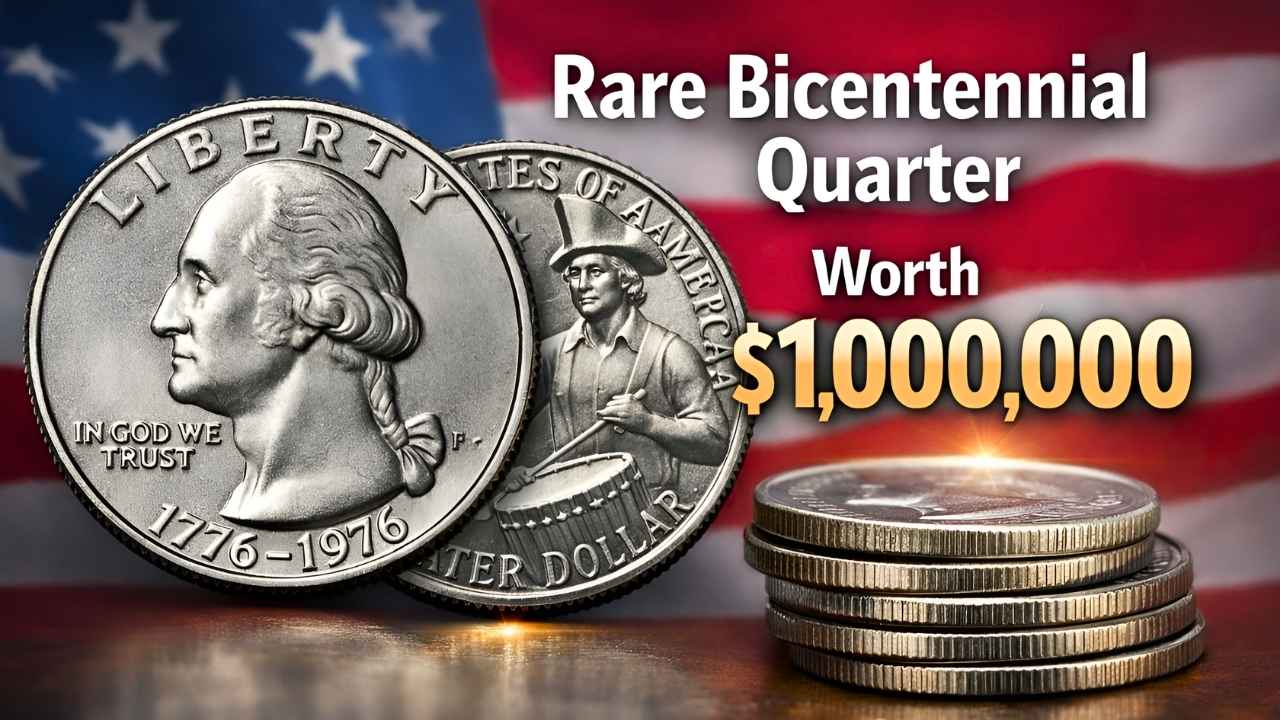
The 1976 Bicentennial Quarter is one of the most recognizable coins in American history. Issued to celebrate the 200th anniversary of the United States, it features a unique reverse design with a colonial drummer and a torch surrounded by thirteen stars. While millions were struck and most are worth only face value, certain rare varieties and high‑grade examples have become highly valuable. In 2026, collectors continue to search for these hidden treasures, with some Bicentennial Quarters worth thousands of dollars even though they can still be found in circulation.
The History of the Bicentennial Quarter
The Bicentennial Quarter was introduced in 1975 and 1976 as part of a special coinage program to commemorate America’s 200th birthday. Designed by Jack L. Ahr, the reverse features a colonial drummer, symbolizing the spirit of independence. Unlike most coins, the Bicentennial Quarter carries the dual date “1776‑1976” to mark the anniversary. It was struck in both copper‑nickel clad and 40 percent silver versions, with the silver issues sold in special collector sets.

Why Bicentennial Quarters Are Valuable
Most Bicentennial Quarters are common, but certain varieties stand out due to rarity, condition, or minting errors. Coins struck in limited quantities, those with unusual features, or examples preserved in pristine condition can command impressive prices. Proof issues, silver strikes, and error coins are especially prized. Collectors are drawn to Bicentennial Quarters not only for their monetary value but also for their historical significance.
Rare Varieties of the 1976 Bicentennial Quarter
Several rare varieties of the Bicentennial Quarter have achieved fame among collectors. The 40 percent silver issues, struck for collector sets, are more valuable than standard clad coins. Proof coins with deep cameo contrast are highly prized. Error coins, such as double die obverse or reverse, off‑center strikes, and coins struck on wrong planchets, can command thousands of dollars. High‑grade examples certified by professional grading services are also extremely valuable.
1976 Bicentennial Quarter Value Chart 2026
In 2026, the value of Bicentennial Quarters varies depending on rarity, condition, and composition. Common circulated examples are worth face value, but rare varieties can command much higher prices. The following chart highlights approximate values:
- Circulated copper‑nickel Bicentennial Quarter – Face value
- Uncirculated copper‑nickel Bicentennial Quarter – $5 to $20
- 40 percent silver Bicentennial Quarter – $10 to $50 depending on grade
- Proof Bicentennial Quarter with deep cameo – $50 to $500 depending on grade
- Rare error varieties – $1,000 to $5,000 or more depending on rarity and demand
- Exceptional high‑grade examples (MS67 or higher) – Thousands at auction
Condition and Grading
Condition plays a crucial role in determining the value of Bicentennial Quarters. Coins are graded on a scale from Poor to Mint State, with higher grades commanding higher prices. Uncirculated examples with sharp details and original luster are especially valuable. Proof coins, struck with polished dies and mirror‑like surfaces, are also highly prized. Professional grading services provide authentication and ensure accurate valuation, giving collectors confidence in their purchases.
Market Value in 2026
In 2026, the market for Bicentennial Quarters remains strong. Auction records show that rare varieties and high‑grade coins continue to attract extraordinary bids. Demand is fueled by both collectors and investors seeking tangible assets with historical significance. Rare Bicentennial Quarters remain one of the most stable and rewarding investments in the collectibles market.
Collecting Tips
For collectors, searching for Bicentennial Quarters can be both exciting and rewarding. Checking pocket change, coin rolls, and estate sales may yield hidden treasures. Magnification tools help identify varieties and errors, while reference guides provide information on values. Proper storage in protective holders preserves condition and prevents damage. Networking with other collectors and attending coin shows can also provide opportunities to learn and acquire rare examples.

Investment Potential
Rare Bicentennial Quarters offer strong investment potential. Their historical significance, limited supply, and demand among collectors make them attractive assets. In 2026, investors continue to view rare coins as stable investments, with values likely to rise over time. Legendary error coins and high‑grade silver issues remain highly desirable, ensuring long‑term appeal. For those seeking diversification, rare coins provide both cultural and financial rewards.
Key Highlights
- Bicentennial Quarter introduced in 1975‑1976 to celebrate America’s 200th anniversary
- Features unique reverse design with colonial drummer and dual date “1776‑1976”
- Rare varieties include 40 percent silver issues, proof coins, and dramatic errors
- Condition and grading critical for determining value
- In 2026, rare Bicentennial Quarters continue to command high prices at auction
- Collectors actively search for hidden treasures in circulation and estate sales
Final Words
The 1976 Bicentennial Quarter is more than just a coin; it is a piece of American history that continues to inspire collectors and investors. From its patriotic design to its rare varieties, the coin represents both legacy and value. In 2026, high‑grade examples and rare errors remain highly sought after, with values reaching impressive levels. For anyone passionate about numismatics, the Bicentennial Quarter offers a journey into history, investment, and the thrill of discovering hidden fortune.